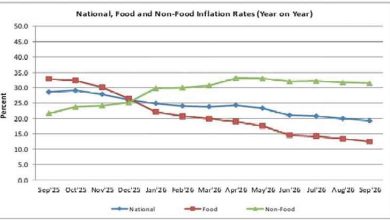
The Reserve Bank of Malawi (RBM) says it will assess the impact of the recently adjusted fuel pump prices on its inflation projections.
The 33.2 percent fuel price hike last Wednesday came almost two months after the central bank revised upwards the 2025 annual average inflation rate forecast from 27.4 percent to 28.5 percent, citing persistent upside risks to food prices.

In a written response, RBM spokesperson Boston Maliketi Banda said the central bank has taken note of the impact of fuel price hike on transport cost.
“We will assess the implications for inflation and evaluate whether this development will materially affect our previous projections,” he said.
Malawi Energy Regulatory Authority (Mera) increased petrol and diesel pump prices by an average of 33.16 percent in a move meant to ensure “sustained fuel supply and attain cost-reflective pricing”.
Following the adjustment, petrol is now selling at K3 499 from K2 530 per litre while diesel is now fetching K3 500 per litre from K2 734.
The increase comes midway the 2025/26 National Budget, which was premised on the assumption that inflation will average 22.3 percent during the year.
In an interview, Scotland-based Malawian economist Velli Nyirongo said fuel is a critical input across the economy, influencing transportation, production and distribution costs.
“Although transport itself represents only a modest share of the inflation basket, its indirect impact is much larger as it affects distribution of food, which constitute more than half of household expenditure,” he said.
Employers Consultative Association of Malawi data show that the cost of basic needs, excluding transport expenses, increased by 21 percent from K739 023 in January to K898 280 in August, but when transport is factored in, the cost rises to K962 280.